CAPM Phases, Stage Gates, and Delivery Cadence
Study CAPM Phases, Stage Gates, and Delivery Cadence: key concepts, common traps, and exam decision cues.
Phases, stage gates, and delivery cadence help CAPM describe how work is grouped, reviewed, and advanced. They are not just labels. They control when the project should pause, what evidence should be reviewed, and how often value is expected to appear.
Why It Matters
Candidates often blend three different ideas:
- phases as chunks of work
- gates as review points
- cadence as the rhythm of delivery or review
When those ideas blur together, it becomes harder to answer questions about approval, sequencing, and control. CAPM expects you to see that a project may use phases, that some organizations add gates between phases, and that delivery cadence can be slow or fast depending on the chosen approach.
Visual Guide
This visual works better than a simple flowchart because the lesson depends on spacing and rhythm. A phase is the work band, a gate is the review checkpoint between bands, and cadence is the repeating tempo of those review or delivery intervals.
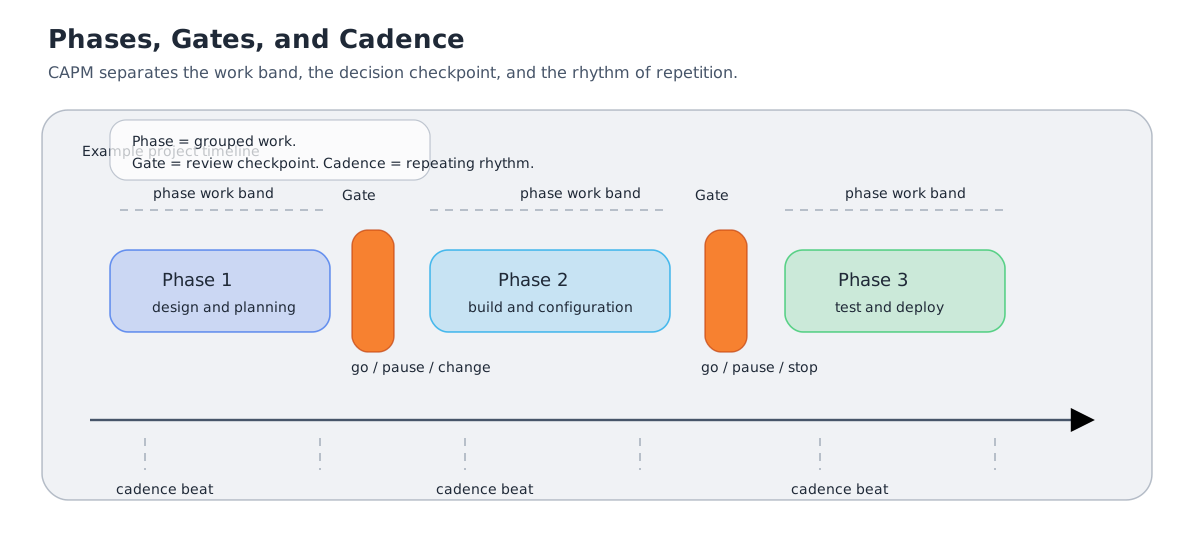
The gate is not the same as the phase. It is the checkpoint that decides whether work should proceed, pause, change, or stop.
What CAPM Usually Wants You To Notice
- A phase groups related work.
- A gate is a control or approval point.
- Cadence describes how often planning, review, or delivery repeats.
In predictive work, phases and gates are usually more visible and formal. In adaptive work, the cadence is more frequent and iterative, even if governance reviews still exist.
A Gate Tests Readiness, Not Just Completion
One of the most common CAPM mistakes is assuming that finishing the work inside a phase automatically means the next phase should begin. A gate exists because completion and readiness are not always the same. The work might be finished, yet the evidence, quality level, risk picture, or stakeholder approval needed to move forward may still be weak.
That is why the stronger reading of a gate is “decision point,” not “milestone celebration.” CAPM questions often reward candidates who notice that the real issue is whether the project should proceed, pause, change course, or stop.
Cadence Changes How Fast Feedback Appears
Cadence is not just a calendar concept. It affects how quickly the team sees information, reviews progress, and adjusts. In a slower cadence, feedback and review happen less often and larger chunks of work may accumulate between checkpoints. In a faster cadence, the team can inspect, learn, and adjust more frequently. CAPM often expects candidates to connect cadence to management behavior, not just to timing words.
This helps when a scenario asks whether review, planning, or delivery should happen in smaller repeated cycles or in larger stage-based segments.
Phases, Gates, And Cadence Can Coexist
Another exam trap is treating these ideas as mutually exclusive. A project can have phases and also use recurring cadence inside those phases. It can have iterative delivery cycles while still using formal gates at certain control points. CAPM usually rewards candidates who can hold that mixed picture instead of forcing every project into one simple pattern.
Check Your Understanding
Sample Exam Question
Scenario: A sponsor says the team already completed the design phase, so there is no need for the scheduled governance review before moving into build work. The sponsor argues that the phase itself proves readiness.
Question: How should the sponsor treat the scheduled governance review?
- A. Skip the review because completing the phase and passing the gate are the same thing
- B. Continue into build because cadence matters more than formal decision points
- C. Replace the review with a lessons-learned meeting because gates are mainly retrospective
- D. Hold the governance review because a stage gate is the decision point that confirms whether the project should proceed from one phase to the next
Best answer: D
Explanation: CAPM expects candidates to distinguish between performing the phase work and passing the gate that authorizes the next move. The gate is the control point, not the phase itself.
Why the other options are weaker:
- A: It collapses two different concepts into one.
- B: Cadence does not remove governance needs.
- C: Lessons learned can help, but they are not the same as a go/no-go review.