PfMP Aggregate Risk
Study PfMP Aggregate Risk: key concepts, common traps, and exam decision cues.
Aggregate risk and portfolio exposure are different from a list of separate component risks. PfMP expects you to examine how the total portfolio is exposed through concentration, timing, dependency, regulation, funding, and strategic fragility.
What PfMP is really testing
The exam is checking whether you can think in aggregate. A portfolio can look acceptable component by component and still carry too much combined exposure in one market, capability, geography, benefit assumption, or dependency cluster.
Strong answers also recognize that portfolio risk is strategic. It affects whether the current mix should stay intact, not just whether one component should add a mitigation plan.
Aggregate exposure lenses
| Exposure type | What it looks like at portfolio level |
|---|---|
| concentration | many components depend on one market, customer, supplier, or assumption |
| dependency cluster | several components fail together if one enabling condition fails |
| timing concentration | too much value depends on the same period or decision window |
| funding fragility | multiple components compete for the same constrained funding source |
| regulatory or compliance exposure | one external shift can affect large parts of the portfolio at once |
Visual Guide
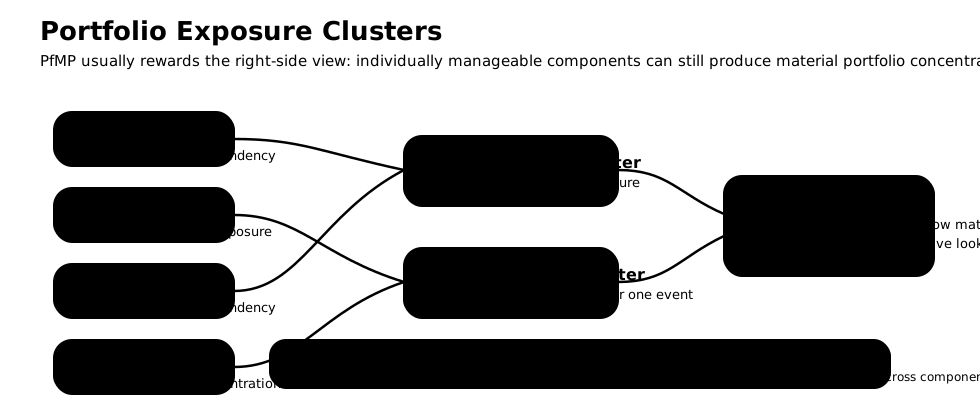
The stronger PfMP view is the portfolio lens on the right. Several individually acceptable components can still create material concentration when they share the same exposure driver.
Stronger versus weaker moves
Stronger answers:
- evaluate cumulative exposure across the portfolio
- identify concentration and dependency risk
- connect risk to strategic outcomes, not just local delivery concerns
- use aggregate exposure to inform balancing decisions
Weaker answers:
- assess each component risk in isolation only
- miss concentration risk because no single component looks extreme
- treat portfolio risk as just a sum of project risks
- ignore how one exposure can threaten multiple benefits at once
Fast exam rule
If several components share the same assumption, supplier, market, or dependency, you are usually looking at portfolio exposure rather than isolated component risk.
Sample Exam Question
No single component is rated high risk, but many portfolio components depend on the same external regulatory assumption. What is the strongest PfMP interpretation?
A. Portfolio risk is low because no individual component is high risk B. The portfolio may still carry material aggregate exposure because the same assumption affects multiple components C. The risk should remain at project level only D. The assumption can be ignored until one component fails
Best answer: B
PfMP expects aggregate portfolio risk thinking. B is strongest because concentration around one shared assumption can create material exposure even when no single component looks extreme. A, C, and D all miss the aggregate nature of the problem.