PMI-CP Claims, Disputes, and Prevention
Study PMI-CP Claims, Disputes, and Prevention: key concepts, common traps, and exam decision cues.
On this page
Claims management on PMI-CP is not just about fighting disputes after they appear. The exam usually rewards prevention, strong evidence, and early intervention that reduces the likelihood or severity of claims.
Stronger answers know the difference between claims and change orders, recognize the role of documentation and front-end planning, and use the available resolution path appropriately.
Issue versus change versus claim versus dispute
| Term | What it usually means | Stronger response |
|---|---|---|
| issue | a problem affecting execution that needs management attention | resolve early with facts, ownership, and current project controls |
| change order | a formal approved adjustment to scope, cost, time, or terms | process through the agreed change mechanism |
| claim | a party assertion that it is entitled to relief, compensation, or time | support or challenge it with contract language and evidence |
| dispute | an escalated unresolved disagreement | move through the defined resolution path before positions harden further |
Visual Guide
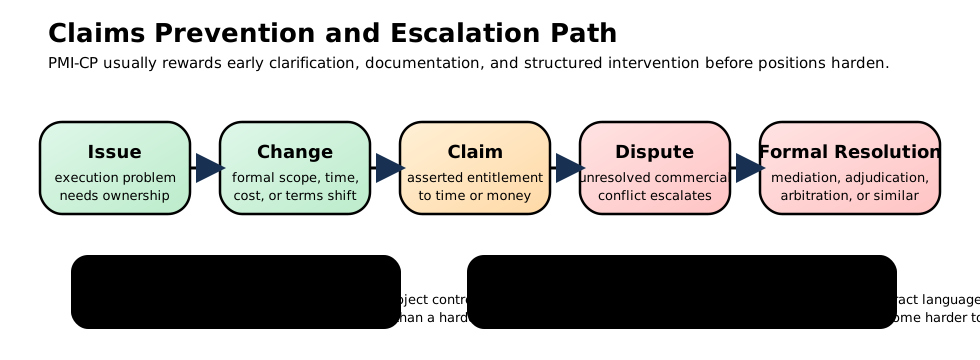
The strongest PMI-CP answers stay on the left side of this path as long as possible: clarify, document, and intervene before the issue becomes a formal commercial position.
Stronger answers usually do
- distinguish claims from normal variation or change-order handling
- use documentation, risk management, and front-end planning to reduce claim exposure
- identify early intervention points instead of waiting for positions to harden
- evaluate root causes so recurring claim drivers are addressed
Common traps
- treating claims as inevitable byproducts of construction work
- reacting only after the dispute becomes formal
- overlooking how contract type and delivery method affect claim patterns
- relying on opinion instead of evidence
Revised on Monday, June 15, 2026