PMI-PMOCP Value Proposition and Service Catalog
Study PMI-PMOCP Value Proposition and Service Catalog: key concepts, common traps, and exam decision cues.
On this page
Value proposition is how the PMO explains why its services deserve adoption and funding. PMI-PMOCP expects the PMO to describe its benefits clearly, tailor that message to different customer groups, and structure a service catalog that supports real consumption.
The service catalog is stronger when it shows not only what the PMO offers, but why those offerings matter.
Visual Guide
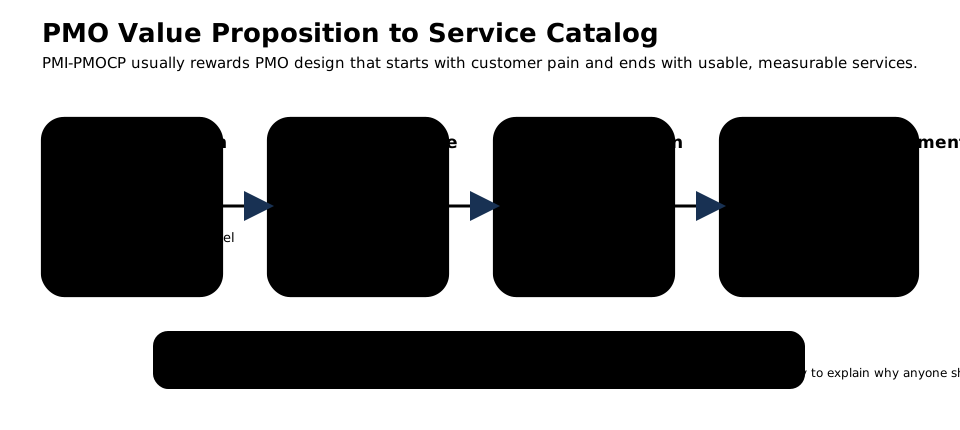
The stronger PMO design path moves from customer pain to measurable value and then to services. Weak PMOs start by listing services they want to provide and try to justify them afterward.
Customer-to-service translation table
| Customer concern | Stronger PMO value statement | Likely service catalog response |
|---|---|---|
| inconsistent project delivery | improve standardization and delivery reliability | methods, governance, templates, quality reviews |
| low visibility into portfolio performance | improve decision-quality and reporting clarity | dashboards, reporting cadence, portfolio analysis |
| weak capability across project roles | improve competency and delivery maturity | training, coaching, community of practice |
| overloaded teams and fragmented support | improve service fit and prioritization | intake, triage, advisory tiers, defined service levels |
Stronger answers usually do
- articulate the PMO’s value in business language
- support the value proposition with evidence such as case examples or measured contribution
- create a clear service catalog and service-level structure
- improve offerings continuously based on feedback and performance
Common traps
- listing services without clarifying benefit
- using the same value message for every customer group
- creating service catalogs that are detailed but not usable
- treating service-level expectations as optional
Revised on Monday, June 15, 2026