PMI-PMOCP Onboarding, Workflows, and Service Delivery
Study PMI-PMOCP Onboarding, Workflows, and Service Delivery: key concepts, common traps, and exam decision cues.
On this page
Service onboarding and workflow design matter because customers experience the PMO through its operations, not through its mission statement. PMI-PMOCP expects the PMO to introduce services clearly, support customers during onboarding, and run repeatable delivery processes.
Stronger answers combine operational clarity with customer support. Weak answers launch services without adoption planning.
Onboarding workflow table
| Step | Stronger PMO behavior | Weak version |
|---|---|---|
| entry | define how customers request or enter the service | rely on informal access only |
| onboarding | explain scope, expectations, roles, and support path | assume customers will figure it out |
| workflow execution | run a repeatable service process with visible handoffs | improvise each request differently |
| feedback and improvement | use service data and customer feedback to refine delivery | collect feedback but leave the workflow unchanged |
Visual Guide
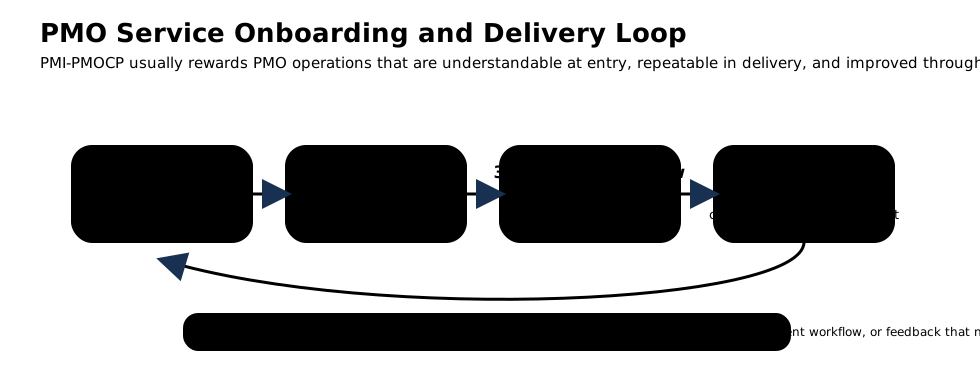
The stronger PMI-PMOCP pattern is a loop: customer entry, clear onboarding, repeatable service workflow, then feedback back into the operating model.
Stronger answers usually do
- build structured onboarding for new PMO service customers
- create documentation, guides, and training where needed
- define workflows, escalation paths, and feedback loops for services
- use metrics and controls to improve how services are delivered
Common traps
- assuming customers will understand services without onboarding
- documenting a workflow without supporting its use
- escalating operational issues without improving the underlying process
- gathering feedback without changing delivery
Revised on Monday, June 15, 2026