PMI-PMOCP Mandate, Governance, and Sponsorship
Study PMI-PMOCP Mandate, Governance, and Sponsorship: key concepts, common traps, and exam decision cues.
On this page
Mandate and governance decide whether the PMO can actually operate. PMI-PMOCP expects you to define scope, authority, roles, and decision processes clearly enough that the PMO can act without constant ambiguity.
Executive sponsorship matters because a mandate without backing is fragile.
Mandate foundation table
| Element | Why it matters | Weak version |
|---|---|---|
| mandate | defines what the PMO is meant to do | broad aspiration with no operational meaning |
| authority | determines what the PMO can actually decide or require | responsibility with no decision rights |
| sponsorship | gives legitimacy and support when resistance appears | named sponsor with no active backing |
| governance path | clarifies how escalations and decisions move | committees that exist without clear purpose |
Visual Guide
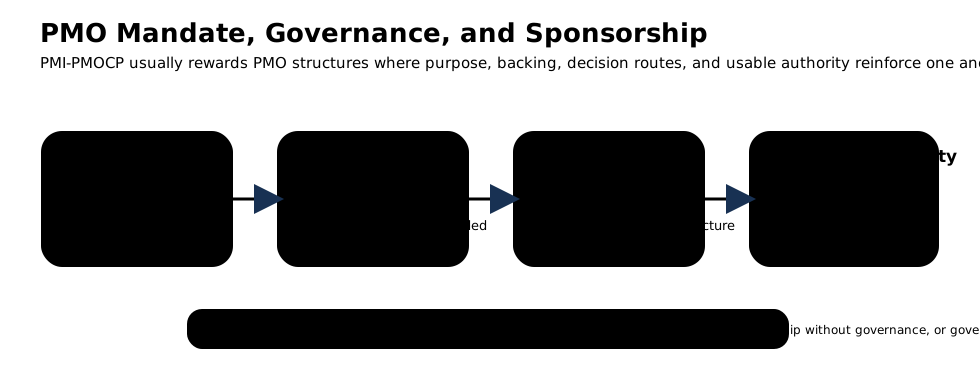
The stronger PMO setup is sequential: the mandate defines purpose, sponsorship gives backing, governance gives decision routes, and authority makes action possible.
Stronger answers usually do
- define scope, authority, and roles clearly
- document the PMO mandate in a charter or similar formal frame
- secure sponsorship and stakeholder buy-in early
- build governance, reporting, and escalation mechanisms that can adapt over time
Common traps
- giving the PMO responsibility without authority
- creating governance forums without clear decision purpose
- assuming sponsorship exists because the PMO was announced
- leaving escalation paths vague until conflict appears
Revised on Monday, June 15, 2026