PgMP Benefits Mapping, Assumptions, and Value Logic
Study PgMP Benefits Mapping, Assumptions, and Value Logic: key concepts, common traps, and exam decision cues.
Benefits mapping turns a program from coordinated activity into coordinated value. PgMP expects you to understand how component outputs connect to outcomes, how those outcomes produce benefits, and where the value chain can break.
If that logic is weak, the program manager cannot make strong prioritization, funding, or transition decisions because the program is no longer being managed toward a clear value model.
Benefits-chain table
| Layer | What it should show | Weak version |
|---|---|---|
| output | what the component delivers | activity listed with no connection to change |
| outcome | what changes because the output is used | vague hope with no user or business effect |
| benefit | measurable value the organization expects | slogan-level language with no proof path |
| assumption or enabler | what must be true for value to appear | left invisible until value fails to show up |
Visual Guide
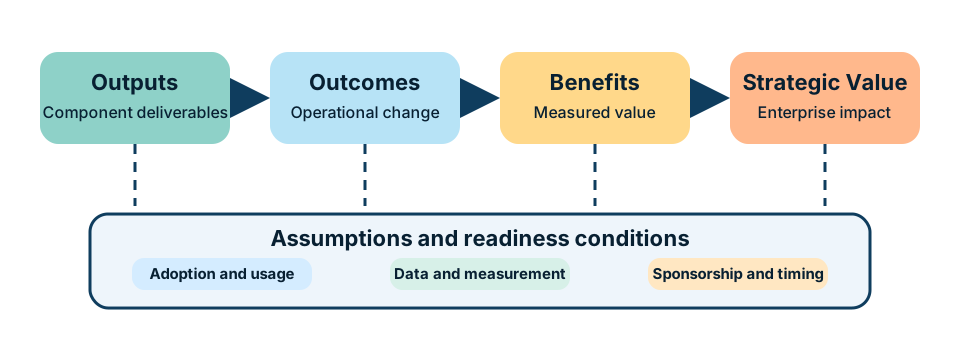
The top row is the visible delivery chain. The lower lane shows the hidden conditions that often decide whether value is realized. On PgMP, a stronger answer protects both the delivery path and the assumptions that let delivered outputs turn into real benefits.
Program-value shortcut
| If a component is being questioned… | Stronger PgMP question |
|---|---|
| it is expensive but politically visible | does it sit on the critical benefits path? |
| it is quiet but enabling | does removing it break downstream value logic? |
| benefits are delayed | did assumptions or readiness conditions change? |
| one output is complete | did that output actually move the outcome closer? |
What changes the answer
| Scenario clue | Stronger PgMP interpretation |
|---|---|
| the output is complete but adoption is weak | the outcome and benefit path is still at risk |
| one enabling component looks quiet or indirect | it may still be critical if it unlocks downstream value |
| benefits are not appearing on time | assumptions, readiness, measurement windows, or handoff conditions may have failed |
| leaders want to cut less visible work | check whether that work sits on the critical benefits path before approving the cut |
Stronger answers usually do
- identify the path from outputs to outcomes to measurable benefits
- test whether enabling conditions and assumptions are still valid
- track which components are benefit enablers rather than only visible deliverables
- make tradeoffs based on value realization logic, not simple activity completion
Common traps
- treating benefits as slogans rather than measurable changes
- assuming every component contributes equally to value
- ignoring timing differences between delivery and benefit realization
- failing to revisit the benefit map when assumptions change
PgMP scenario lens
When a question asks which work should be protected, accelerated, or reconsidered, the stronger answer often follows the benefits chain. The best choice is not automatically the most visible or expensive component. It is the one that most strongly protects or enables business value.