PgMP Stakeholder Analysis and Engagement Planning
Study PgMP Stakeholder Analysis and Engagement Planning: key concepts, common traps, and exam decision cues.
Stakeholder analysis in PgMP is about understanding who can accelerate, distort, block, or sustain the program. Because programs cut across functions and interests, generic communication plans are rarely enough.
The strongest answers identify what different stakeholders need, what they fear, what authority they hold, and how the program should engage them over time. That planning is dynamic, not one-time.
Stakeholder analysis table
| Stakeholder group | What the program should usually analyze | Weak shortcut |
|---|---|---|
| sponsors and decision bodies | authority, decision needs, escalation role, benefit expectations | treat them as generic approvers only |
| component or workstream leaders | dependency impact, execution concerns, local incentives | assume they will align automatically |
| operations or transition owners | readiness, sustainment needs, and post-delivery conditions | involve them only near transition |
| affected business groups | resistance sources, adoption needs, and change impact | broadcast updates without targeted engagement |
Visual Guide
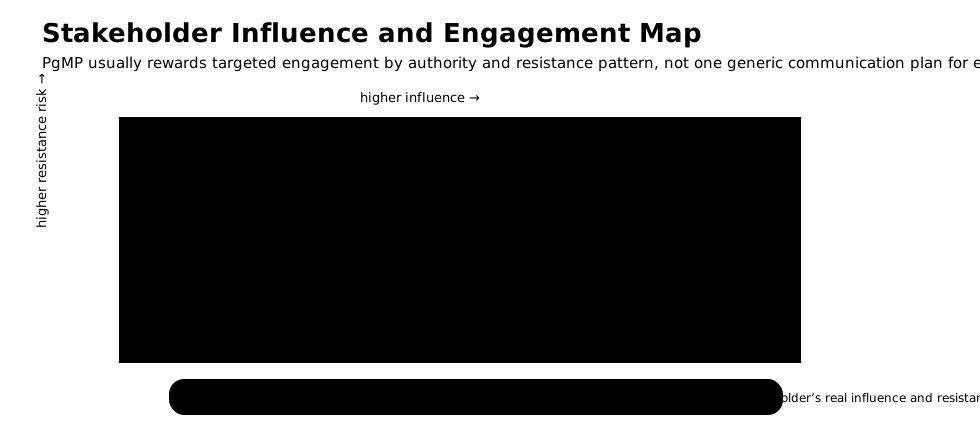
The stronger PgMP pattern is not “communicate more.” It is to match engagement depth and message type to authority, resistance risk, and program impact.
Stronger engagement planning
- distinguishes sponsors, governance bodies, component leads, operations owners, and affected business groups
- analyzes expectations and likely resistance, not just contact details
- matches engagement depth and cadence to stakeholder impact and influence
- updates the approach when the program shifts or external conditions change
Common traps
- assuming all stakeholders need the same message
- treating communication frequency as a substitute for communication quality
- focusing only on supporters and ignoring likely opponents
- forgetting transition stakeholders until late in the program
In exam scenarios
If stakeholder conflict is emerging, the stronger answer often improves analysis and targeted engagement before escalating into blunt control actions. PgMP prefers deliberate influence over avoidable confrontation.