PgMP Planning the Program Architecture and Control Model
Study PgMP Planning the Program Architecture and Control Model: key concepts, common traps, and exam decision cues.
Program architecture means the management structure that lets the program operate as one system. This includes integrated planning, dependency management, governance interfaces, communication paths, risk structure, and the measures used to judge progress.
Stronger PgMP answers build a planning approach that is coherent across components. Weak answers produce several component plans and assume the program will somehow integrate itself.
Architecture layer table
| Layer | What it must do | Weak version |
|---|---|---|
| component plans | define local scope, timing, and execution needs | each component uses different assumptions and thresholds |
| integration logic | show dependencies, interfaces, and shared milestones | dependencies are understood informally only |
| control thresholds | define escalation points, reporting rules, and decision triggers | escalation happens only after surprise |
| governance interface | connect component decisions to program and enterprise oversight | governance is treated as periodic reporting only |
Visual Guide
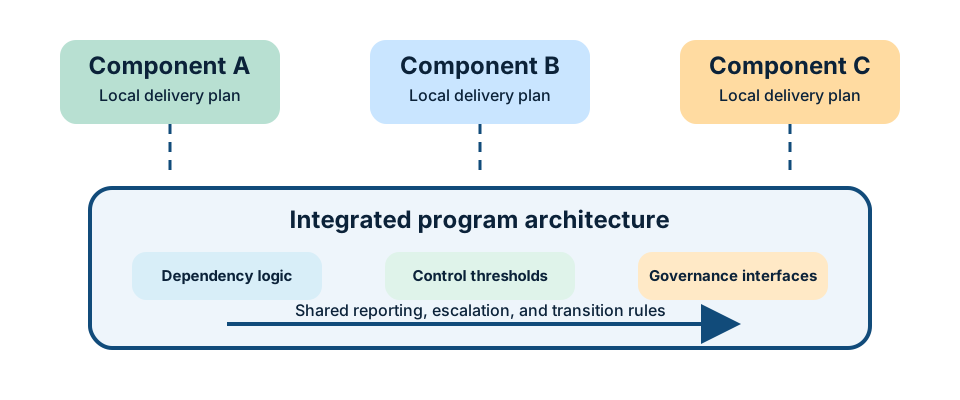
The upper boxes represent component-specific planning. The lower lane is the shared architecture that makes the program manageable as one system. On PgMP, stronger answers build the common dependency, control, and governance logic before delivery pressure makes inconsistencies expensive.
What changes the answer
| Scenario clue | Stronger PgMP move |
|---|---|
| component managers are using different assumptions or thresholds | standardize the control model before execution accelerates |
| dependencies are visible only to local teams | create an integrated dependency and decision structure |
| escalation happens late and inconsistently | define common reporting rules and threshold triggers |
| transition concerns are being deferred | include transition interfaces in the architecture now, not near closeout |
What stronger answers plan for
- dependency and interface visibility across components
- integration points for schedule, budget, quality, risk, and change
- management plans that support coordinated decisions instead of local optimization
- controls that allow timely escalation without unnecessary friction
What usually weakens planning
- creating isolated plans that use different assumptions and thresholds
- focusing only on documentation completeness instead of management usability
- ignoring transition planning until late delivery
- under-planning stakeholder and governance interfaces
In scenarios
When a PgMP question asks what to do before execution accelerates, the strong answer often improves the architecture of management itself. That may mean clarifying dependency logic, integrating plans, defining thresholds, or aligning component managers around a common operating model.